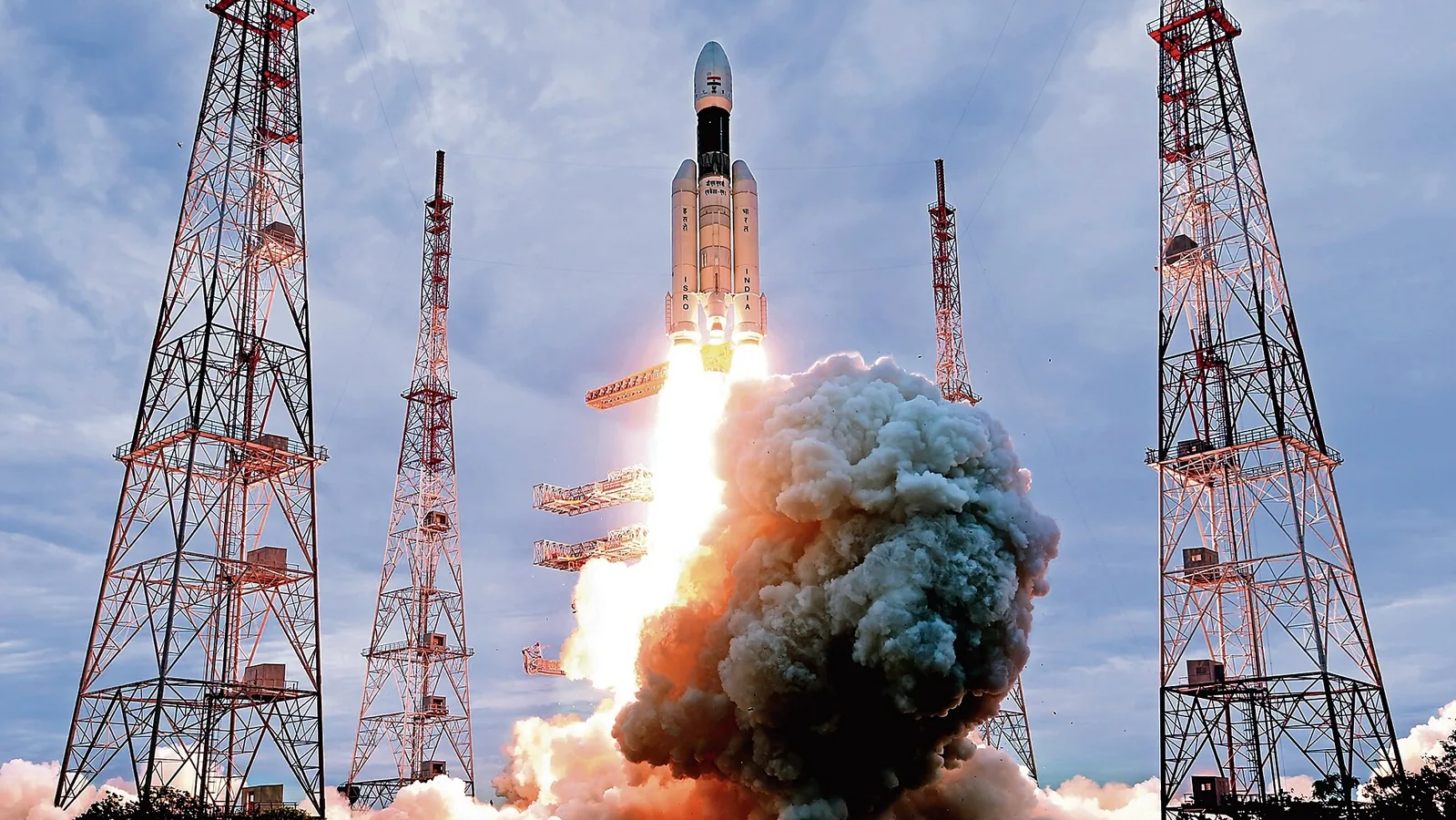
ISRO to launch first test vehicle mission for Gaganyaan in a month or two
The first test vehicle mission, TV-D1, would be followed by the second test vehicle TV-D2 mission and first uncrewed mission of Gaganyaan (LVM3-G1).
The first test vehicle mission of India's ambitious maiden human spaceflight venture Gaganyaan to validate the crew escape system will be launched in a month or two, a key ISRO official said on Friday. According to officials of the Bengaluru-headquartered national space agency, it would be the first of the four abort missions of the Gaganyaan programme. The first test vehicle mission, TV-D1, would be followed by the second test vehicle TV-D2 mission and first uncrewed mission of Gaganyaan (LVM3-G1). The second series of test vehicle missions (TV-D3& D4) and LVM3-G2 mission with robotic payload is planned next.
- LVM3 rocket, the heavy lift launcher of ISRO,
- is identified as the launch vehicle for the Gaganyaan mission.
- It consists of a solid stage, a liquid stage and a cryogenic stage.
- All systems in LVM3 are re-configured to meet human rating requirements and christened Human Rated LVM3 (HLVM3).
"I am glad to say that the LVM3 has been human-rated. When we say human-rated, it should have adequate safety margins," Hutton told the conference, which was organised by the Confederation of Indian Industry. HLVM3 consists of a Crew Escape System (CES) powered by a set of quick acting, high-burn-rate solid motors which ensure that the Crew Module (CM) along with crew is taken to a safe distance in case of any emergency either at the launch pad or during the ascent phase.
 Union Minister
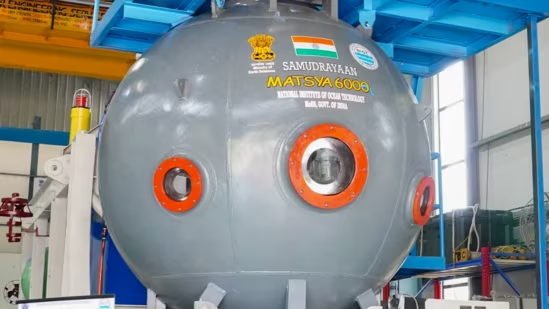
Kiren Rijiju shared pictures of ‘Matsya 6000’, a submersible which is in
preparation for exploring the deep oceans as part of India's ‘Samudrayaan
Mission’ being developed by the National Institute of Ocean Technology (NIOT) in
Chennai, under the Ministry of Earth Sciences. After achieving a successful
‘soft-landing’ on the Moon's south pole, India is now aiming to send three
humans to a depth of 6 km into the ocean for deep-sea exploration and
biodiversity assessments.
Union Minister
Kiren Rijiju shared pictures of ‘Matsya 6000’, a submersible which is in
preparation for exploring the deep oceans as part of India's ‘Samudrayaan
Mission’ being developed by the National Institute of Ocean Technology (NIOT) in
Chennai, under the Ministry of Earth Sciences. After achieving a successful
‘soft-landing’ on the Moon's south pole, India is now aiming to send three
humans to a depth of 6 km into the ocean for deep-sea exploration and
biodiversity assessments.
‘Next is Samudrayaan’: Union minister Rijiju shares pics of submersible Matsya 6000
 Earth
Sciences Minister Rijiju visited NIOT in Chennai on Monday, where he reviewed
the submersible and provided updates on India's first manned deep ocean mission.
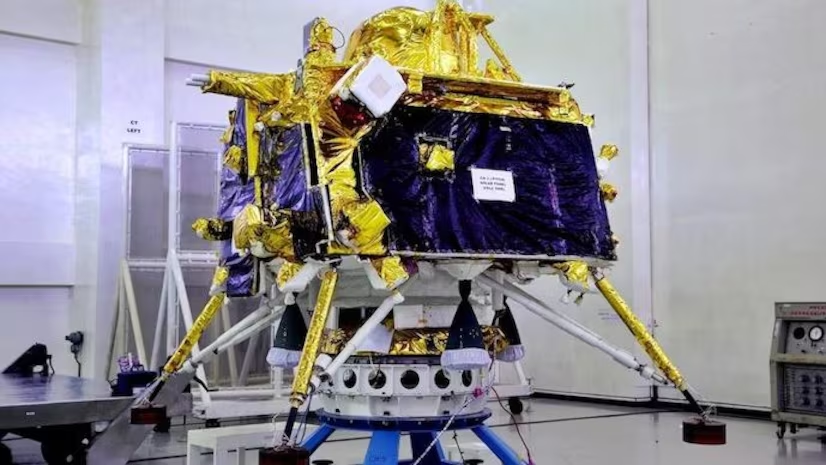
He posted on X (formerly Twitter), “ Next is ‘Samudrayaan’. This is 'MATSYA
6000' submersible under construction at National Institute of Ocean Technology
at Chennai. India’s first manned Deep Ocean Mission ‘Samudrayaan’ plans to send
3 humans in 6-km ocean depth in a submersible, to study the deep sea resources
and biodiversity assessment”
Earth
Sciences Minister Rijiju visited NIOT in Chennai on Monday, where he reviewed
the submersible and provided updates on India's first manned deep ocean mission.
He posted on X (formerly Twitter), “ Next is ‘Samudrayaan’. This is 'MATSYA
6000' submersible under construction at National Institute of Ocean Technology
at Chennai. India’s first manned Deep Ocean Mission ‘Samudrayaan’ plans to send
3 humans in 6-km ocean depth in a submersible, to study the deep sea resources
and biodiversity assessment”
He emphasised that the project will not disrupt the ocean ecosystem. “The Deep Ocean Mission supports the 'Blue Economy' vision of PM @narendramodi ji, and envisages sustainable utilization of ocean resources for economic growth of the country, improve livelihoods and jobs, and preserve ocean ecosystem health,” Rijiju said. In addition to sharing pictures with the scientists and engineers working on Matsya 6000, the Union minister wrote, “Our Scientists, Researchers and Engineers are fully devoted to make the Deep Ocean Mission very successful in a sustainable manner.” Rijiju also shared a video of himself inside the vessel, with an expert explaining how Matsya 6000 will explore the deep ocean and how the individuals joining the deep-sea expedition will be able to sustain themselves there.

Trend Videos



Popular Posts



Recent Reviews

Scroll to Top