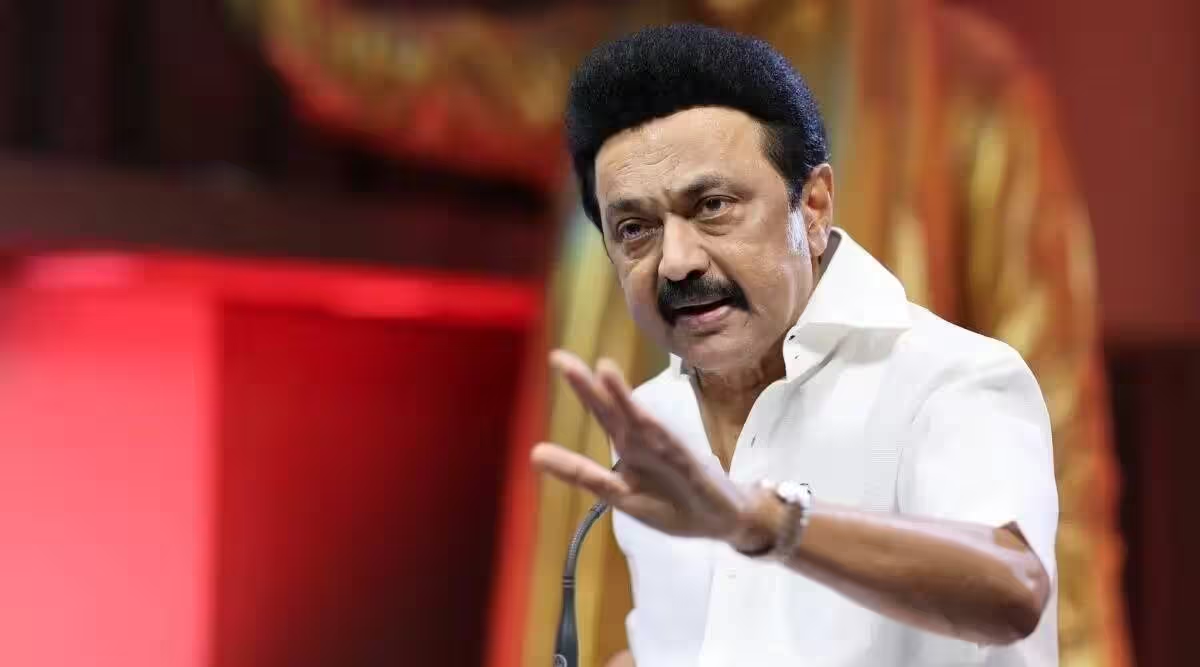
‘Delimitation a sword hanging over southern states’: Stalin seeks PM’s help
The northern states have rebuffed this argument saying that they are short-changed and not represented according to their population weight.
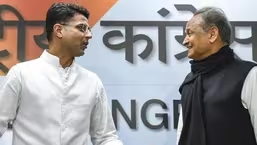
Tamil Nadu chief minister MK Stalin announced his support for the women’s reservation bill on Wednesday but raised concern about the impending delimitation of parliamentary seats, calling it a Damocles Sword and urging Prime Minister Narendra Modi allay the fear among southern states that the exercise will slash their representation in Parliament.
- Political representation has long been a contentious issue in
- India’s federal structure. Since the logic of delimitation of
- parliamentary constituencies is primarily weight of
- population by state, provinces such as Kerala and Tamil Nadu
The debate around delimitation -- which includes the redrawing of constituency boundaries and the reapportioning of seats -- has been reignited by the women’s reservation bill, which passed the Lok Saha on Wednesday and said that it will come into effect after delimitation is completed. In 2002, the 84th amendment to the Constitution froze the number of parliamentary seats till the end of 2025. Southern states have long feared that any rejig in the number of seats will benefit the more populous states in northern India and hurt south India’s relative weight in Parliament.
“It is unjust that southern states, which have diligently followed the Union government’s policies to control population growth, may face punitive measures during the constituency delimitation,” Stalin said in a statement.
But such a delimitation might be explosive. Writing in HT in 2019, political scientists Milan Vaishnav and Jamie Hinston calculated that in 2026, Uttar Pradesh’s Lok Sabha delegation could balloon from 80 to 143, while Kerala’s would remain unchanged at 20, and Tamil Nadu’s would grow from 39 to 49.
He said it was “strange” that the national party did not pass this bill earlier. He accused the BJP of not engaging stakeholders and pushing for the bill ahead of next year’s Lok Sabha elections. “...Defeat is haunting the BJP. They are trying to show this 33% reservation bill as their achievement,” he said. Addressing the Lok Sabha, DMK leader Kanimozhi said: “This Bill was brought shrouded in secrecy... There is no clarity on when they would implement it.” BJP’s Tamil Nadu state president K Annamalai, however, hit out at Stalin alleging that only two of the 34 ministers in his cabinet are women. “Out of the 173 candidates fielded in the 2021 assembly elections, only 12 women were fielded by the DMK, a drop from 18 in 2016, which he said shows the clear lack of will for increased representation of women.”
Trend Videos


Popular Posts



Recent Reviews
Scroll to Top