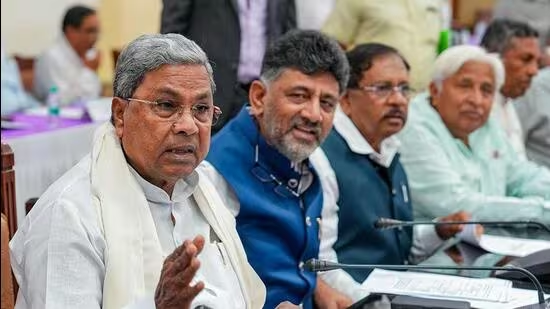
Siddaramaiah seeks PM Modi’s intervention in dispute over Cauvery water
A meeting took place after the CWMA told Karnataka to continue releasing 5,000 cusecs (cubic feet per second) of water to Tamil Nadu for another 15 days Karnataka chief minister Siddaramaiah on Tuesday on Wednesday said Prime Minister Narendra Modi should intervene in the ongoing dispute with Tamil Nadu over the Cauvery river water.
“The Prime Minister has the authority to summon the two states and hear their arguments. Given this context, we have appealed for the Prime Minister’s intervention,” he said, while addressing a meeting of the Karnataka’s Members of Parliament regarding the dispute in New Delhi.
- The meeting took place after the
- Cauvery Water Management Authority (CWMA)
- instructed Karnataka on Monday to continue releasing
- 5,000 cusecs (cubic feet per second)
- of water to Tamil Nadu for another 15 days.
“We have written to the Union Jalshakthi minister twice, providing a comprehensive explanation of the situation. We have also sought appointments with the Union Jalshakthi minister and the Prime Minister for a meeting with our delegation,” Siddaramaiah said. The chief minister said Karnataka would not release Cauvery water and that they would challenge the order of the CWMA in the Supreme Court to get a stay.
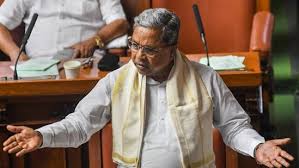
“There is no possibility of releasing water. We have no surplus water. Let’s set aside party politics and stand united in protecting our state, language, water, land, and culture,” the chief minister told union ministers and MPs from the state. “The situation has become critical, and there is no distress formula in place.”
He explained that the state requires 106 TMC (thousand million cubic feet) of water, with 33 TMC for drinking, 70 TMC for crop protection, and 3 TMC for industrial purposes. “We are left with only 53 TMC of water. We cannot spare water for Tamil Nadu. Our rainfall ceases after August, whereas Tamil Nadu continues to receive rain after that. Their groundwater table is also higher, which worsens our situation.”
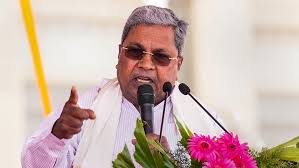
Deputy chief minister DK Shivakumar, who holds the water resources portfolio, said they only have one-third of the required water. “We don’t even have water for drinking. We have discussed (this) with all parliament members, who assured us that they are going to support our fight. We are pressing it before the Supreme Court to give us justice. I hope justice will be given to us,” Shivakumar said. Union ministers Prahlad Joshi, Shobha Karandlaje, Bhagwant Khooba, Narayanaswamy, Rajeev Chandrasekhar, and Supreme Court lawyers representing Karnataka attended the meeting. Speaking after the meeting, Shivakumar, said, “We have discussed the issues with our MPs, and they have all pledged their support in our fight. We are facing a dire situation, which we will present to the Supreme Court. We hope that justice will be served.” In Bengaluru, former chief minister BS Yeddyurappa criticised the state government for neglecting the drought situation. “During my tenure as chief minister, despite the drought, I extensively travelled across the state for development activities. We increased house damage compensation from 50 thousand to 5 lakh rupees. No minister in the Siddaramaiah government ever addressed the drought issue,” he said.
Trend Videos


Popular Posts



Recent Reviews

Scroll to Top